
Do webbed toes in babies need treatment?
Usually not, and rarely in a hurry. Where the toes are joined by skin alone and the webbing does not affect how your baby moves, observation is the normal approach. Surgery becomes a question where the joining involves deeper structures, or where it causes a practical problem. An examination is what tells the two apart.
Joined toes are one of the more common differences babies are born with. They are usually spotted in the first days or weeks, they often run in families, and nothing that happened during pregnancy caused them.
What webbed toes are, and why they happen
Early in development, the hands and feet form as paddles, and the fingers and toes separate out from them. Where that separation does not finish, the toes stay joined. That is toe syndactyly, and it is present from birth rather than something that develops later.
The webbing may run part-way along the toes, which is called incomplete syndactyly, or the full length to the tips, which is complete syndactyly. The second and third toes are by far the most common pair to be affected.
Skin only, or something deeper
Simple syndactyly means skin and soft tissue are joined and nothing else. Complex syndactyly means deeper structures are involved too, which can include bone, nerves and blood vessels.
The two can look similar from the outside, which is the single most important thing for a parent to know. You cannot tell from a photograph, and neither can anyone else. Examination is what establishes it, and it changes everything about what follows.
If you have questions about your child’s care, you can arrange a consultation with Miss Jana Torres-Grau. Arrange a consultation
What to watch as your baby grows
There is nothing you need to do differently day to day. Nappies, socks, first shoes and learning to walk all proceed as they would otherwise, and joined toes do not need protecting, exercising or manipulating.
What is worth noticing, without watching for it anxiously, is whether the toes ever seem to cause a practical problem:
- Do the toes move freely, or does the webbing appear to hold them in an awkward position?
- Once walking starts, is there anything different about how your child moves or balances? (this may not be related to the toes)
- Issue with shoes fit comfortably, or does one toe get pressed against another?
- Is there ever any sign of soreness or skin irritation between the joined toes or nail problems?
For most children the honest answer to all four is no, and that is the answer that supports leaving things alone. If any of them is yes, that is the point to ask for an assessment rather than waiting for a milestone.

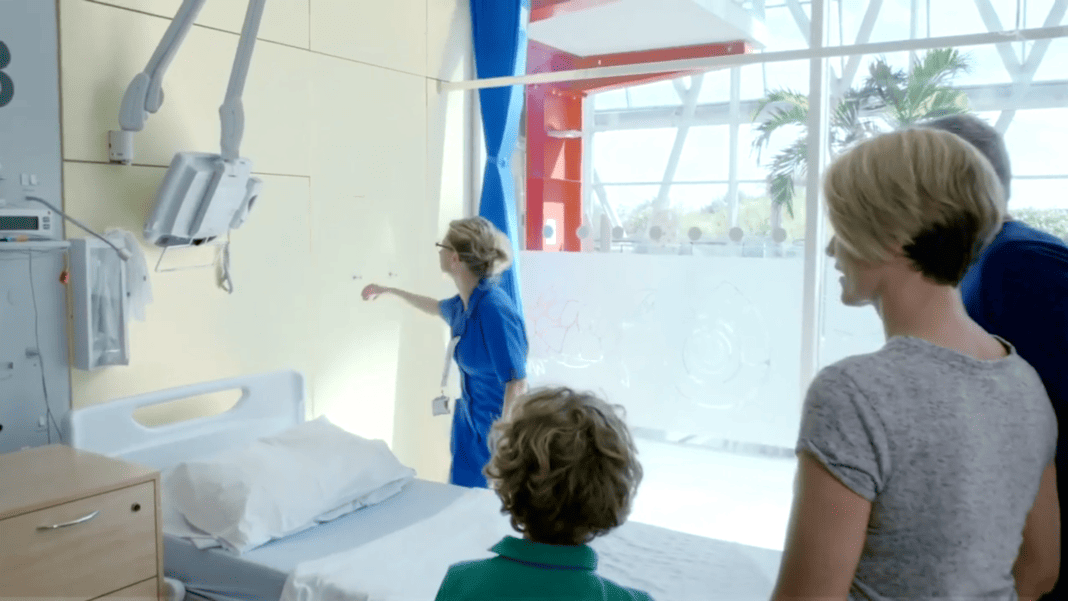
Specialist Hospital Setting
A few words from Miss Jana Torres-Grau
Take a photograph of the toes now, and another every six months or so. If a question ever arises about whether anything has changed, having a record answers it immediately.
What an assessment can tell you
An assessment establishes what a photograph cannot: how far the webbing extends, whether the toes sit and move normally, whether the joining looks like skin alone, and whether there is a functional concern worth acting on.
Miss Torres-Grau examines each child herself and explains what the webbing means for that particular foot, including when her advice is that nothing needs doing. Where the examination raises a question about bone or other deeper structures, an X-ray may help, though it is not needed for every child.
The useful thing to understand about an assessment is that observation is one of its possible outcomes, not a failure to reach one. A specialist saying the toes are best left alone is a clinical conclusion, and a common one.
If surgery is discussed, what it involves
Surgery is the only way to physically separate joined toes. They do not divide on their own as a child grows, so anyone waiting for that is waiting for something that does not happen.
The operation takes place under a general anaesthetic. The surgeon separates the joined area and forms a new space between the toes using flaps of nearby skin. Because two joined toes have less skin between them than two separate toes need, a graft is often required, usually taken from the groin or inner arm, leaving a scar there as well.
The trade-off is straightforward to state and harder to weigh. Separation removes the webbing and leaves permanent scars in its place. Recognised risks include bleeding, infection, loss of skin or graft, uneven toe shape, and webbing recurring. Nerve injury or loss of blood supply to a toe is very rare. Where several adjacent toes are joined, the work may be staged across more than one operation to protect the blood supply to each toe.
Recovery involves dressings rather than a quick return to normal. The Evelina London Children’s Hospital pathway includes a dressing review at around seven to ten days, weekly dressing changes for about four weeks, and surgical follow-up at six to eight weeks.
A few words from Miss Jana Torres-Grau
Ask specifically whether the joining involves skin alone. That single answer determines whether any future conversation about surgery is a straightforward one or a more involved one, and it is worth knowing early even if you never act on it.
The decision is about function, not appearance
The assumption worth setting aside is that joined toes are a problem waiting to be fixed. They are a variation, and for most children they do not constitute a functional problem.
Where there is a functional reason to operate, surgery has a clear purpose and the trade-offs are worth accepting. Where there is not, the operation offers a change in appearance in exchange for permanent scars, a general anaesthetic and several weeks of dressings, months of scar management, on a part of the body almost always covered by a shoe.
There is no evidence-based deadline pushing families towards a decision. No universally correct age exists for foot syndactyly surgery, and the timing follows the anatomy and the reason rather than a birthday.

A photo of a consultation with Jana Torres-Grau – Illustrative Image
Every child is different, so a personal assessment is the best next step. Ask a question
Common questions about webbed toes in babies
Can webbed toes separate naturally as a baby grows?
No. The toes stay joined as your child grows, and only surgery separates them physically. That is not an argument for operating, though. Where the webbing causes no problem, leaving it alone remains entirely reasonable.
Will webbed toes affect walking or balance?
Often not at all. Discomfort, limited movement and difficulty walking or balancing are described in the literature, but they do not occur in every child, and skin-only webbing between the second and third toes typically causes none of them. Function is assessed rather than assumed.
What age is best for webbed toe surgery?
There is no universally correct age for toes. Timing depends on what is joined, whether there is a functional reason to operate, and what the operation would involve. Advice about timing for joined fingers does not transfer to feet.
Can webbed toes grow back after surgery?
Recurrent webbing is a recognised risk, and some children need further surgery because of it. It cannot be predicted in advance for an individual child, which is exactly why it belongs in the conversation before anyone agrees to an operation.
Should I ask for a referral now or wait?
If you want the anatomy established, ask now, because that answer does not change with time and knowing it removes the uncertainty. If your only question is whether to operate, there is no rush, and there is no window you risk missing by taking your time.
This is general information, not medical advice.
Reviewed by Miss Jana Torres-Grau, Consultant Paediatric Plastic Surgeon, FRCS (Plast), General Medical Council Specialist Register.
