Why do your child’s ears stick out?
Your child’s ears usually stick out because the outer ear cartilage has formed with a shape or angle that holds the ear further from the head. Age matters because babies and older children have different options, and your child’s own view matters before any surgical choice is made.
Parents often try to work out the cause from photos, family comments or online before-and-after images. That rarely gives a clear answer because the same visible concern can come from different parts of the ear.
Prominent ears in children are about shape, position and timing. I look at why the ears are prominent, how old your child is, and whether your child has raised the issue themselves.
Why do my child’s ears stick out?
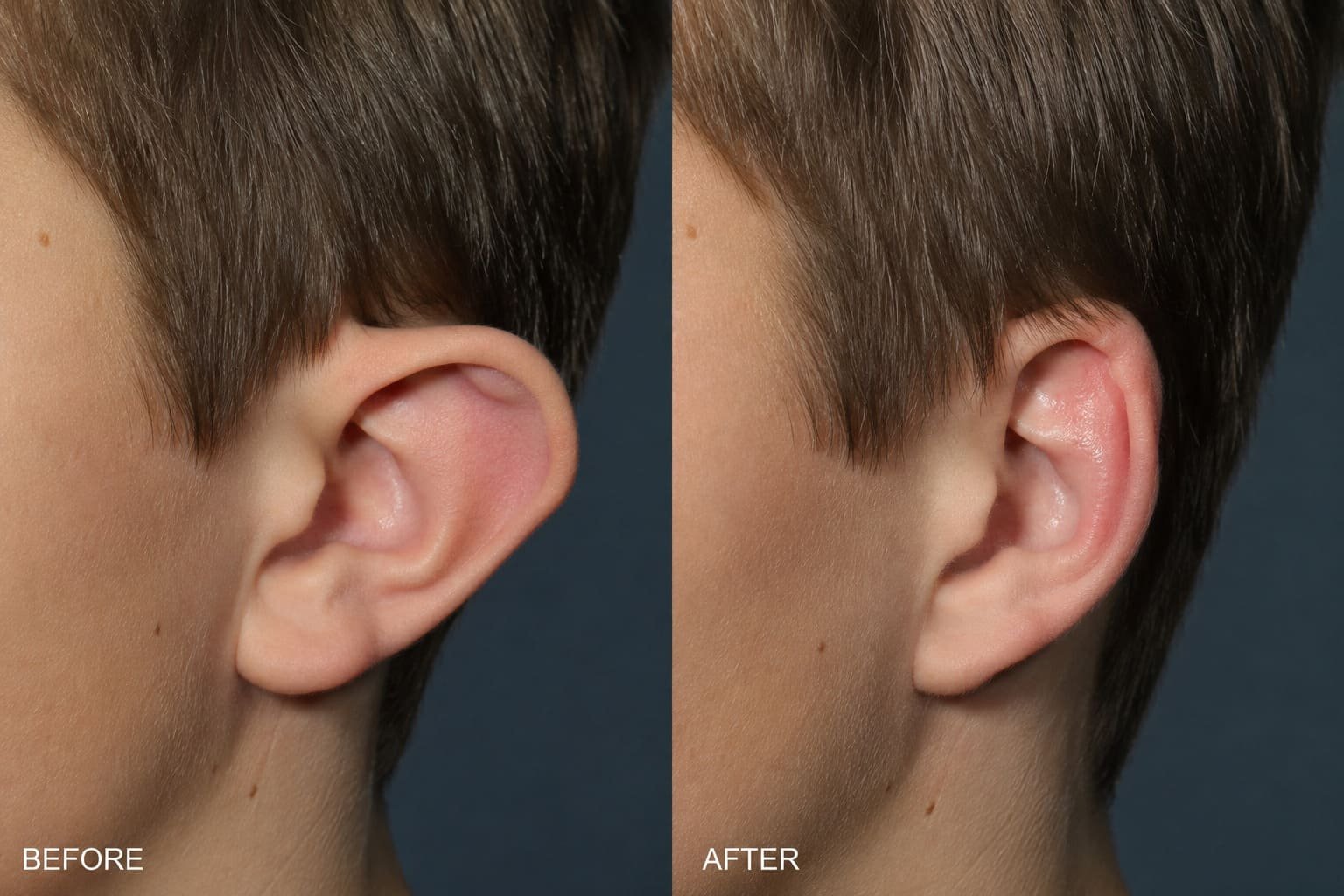
A child’s ears usually stick out because the ear cartilage has formed in a way that changes the fold or angle of the outer ear. Parent blame has no place in this assessment.
Ear cartilage is the firm, flexible tissue that gives the outer ear its shape. Prominent or protruding ears happen when the folds inside the ear have not formed in the expected way. That can make the ear sit further away from the head or make one part of the ear stand out more than another.
One child may have ears that stick out mainly at the top. Another may have the whole ear sitting further from the head. A third child may have one ear that sticks out more than the other, which is common enough for me to check both sides carefully rather than assume they match.
A photograph can show what you have noticed, but an examination shows how it is happening in your child.
If you have questions about your child’s care, you can arrange a consultation with Miss Jana Torres-Grau. Arrange a consultation
Which ear shapes make ears look more prominent?
Ears that ‘stick out’, covers more than one ear shape. I focus on the parts of the outer ear that are different, because two children with prominent ears do not automatically have the same anatomy or the same treatment options.
The anti-helical fold
The anti-helical fold is a fold in the upper part of the ear. Its shape affects how prominent the upper ear looks, so I check whether the top of the ear has enough fold and how that fold sits.
Parents often notice this as ears that seem to stick out at the top. The point of naming the fold is not to make you diagnose it at home. It helps explain why I look closely at the upper ear rather than treating ear prominence as one single pattern.
The conchal bowl
The conchal bowl is the deeper bowl-shaped part of the ear near the ear opening. Its depth and angle affect how far the ear sits from the side of the head.
In a consultation, I check whether prominence comes mainly from this deeper part, from the upper fold, or from both. That matters because pinnaplasty or otoplasty, the medical words used for ear pinning surgery, is planned around the exact shape of the ear in front of me.
Another child’s photos will not tell you what is right for your child’s ears.

Laboratory researcher using microscope at Evelina London Children’s Hospital.
A few words from Miss Jana Torres-Grau
If a child has one ear that sticks out more than the other, ask for both ears to be examined separately. Side to side differences often shape the discussion about treatment.
Can prominent ears be corrected without surgery?
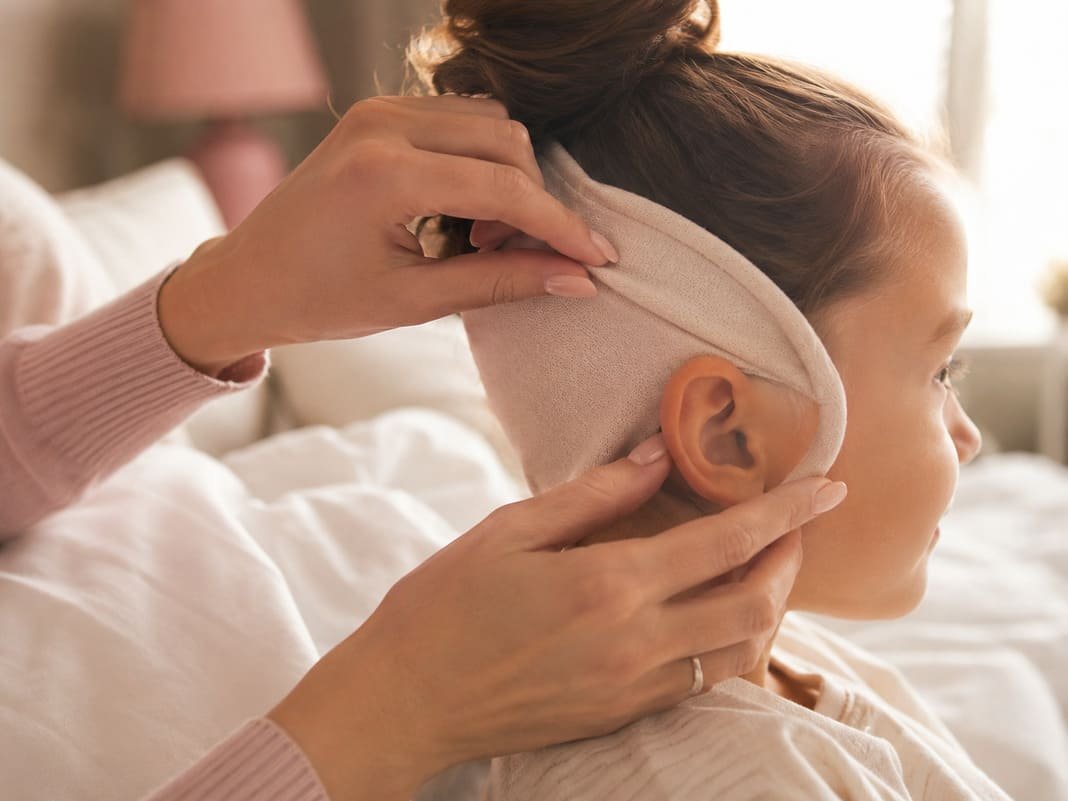
For babies, ear splints are the main non-surgical option to ask about early. For older children, the conversation changes because the cartilage is different and splints are no longer effective.
The NHS says ear splints can be used in the rim of a baby’s ears before the age of 6 months to correct the shape, and it advises parents to ask their GP about ear splints if prominent ears are noticed at birth. I do not recommend to tape a baby’s ears at home without guidance. Proper ear assessment, splints and medical advice are invaluable.
| Situation | Option discussed | What you should know |
|---|---|---|
| Baby’s ears are noticed at birth | Ear splints and cartilage moulding | This is time-sensitive and needs proper advice early |
| Older baby | Specialist review | The useful question is whether splints still fit the age and ear shape |
| Older child | Assessment for ear correction surgery | Surgery is a separate discussion and depends on anatomy and readiness |
Without surgery has a narrow meaning here. It mainly applies to baby ear splints within the early window, and it does not give a guarantee about the future. For an older child, I start with the child, the ear shape and the timing before talking about any procedure.

What age can a child have ears pinned back?
Ear pinning surgery is usually discussed for children over 7 or 8, because younger children’s ears are still growing and their cartilage is too soft to hold stitches well. The NHS describes ear correction surgery as cosmetic surgery to change the size or shape of the ears, or to pin them back if they stick out.
The medical names you may see are otoplasty and pinnaplasty. Both refer to surgery that changes the shape or position of the outer ear. For children, the age question is only part of the decision.
In my practice, I also ask what your child thinks. A parent can be concerned before a child has noticed their ears, and that concern deserves a proper conversation. Surgery should wait if a child is indifferent or opposed because the child’s own wish are a serious part of the decision.
For some families, waiting gives the clearest answer. Your child grows, their view becomes clearer, and the discussion becomes less about adult worry and more about what matters to them.
A few words from Miss Jana Torres-Grau
If prominent ears were noticed at birth, early review matters because baby ear splinting has a limited window. A prompt consultation gives the clearest view of whether that option still fits.
How does a specialist assessment give you a clear answer?
A specialist assessment separates the ear shape, your child’s age and your child’s readiness. That is the point many online explanations miss.
A common consultation starts with a parent saying they have noticed the ears, then adding that the child has either said nothing or has begun asking about them. I take both parts seriously. I assess each child myself, and I explain what I find in plain language.
During an assessment for prominent ears, I work through the decision in order:
- I examine the outer ear shape, including the upper fold and the deeper bowl-shaped part.
- I compare both sides, because one ear can be more prominent than the other.
- I consider your child’s age and how that affects the options.
- I listen to your child’s view, using language that fits their age.
- I give you a straight view of what is appropriate, including when surgery is not the right step.
For private care in England, the NHS advises checking that a surgeon is registered with the General Medical Council and is on the GMC Specialist Register with a licence to practise. It also advises checking that an independent clinic or hospital providing surgery is registered with the Care Quality Commission. Those checks matter, and so does a careful child-focused consultation.
My paediatric plastic surgery practice is based in London, at The Evelina London Children’s Hospital. Families looking for ear correction for children in London usually need one clear thing first: a calm explanation of what is causing the prominence in their child, not a rush into a procedure.
Every child is different, so a personal assessment is the best next step. Ask a question
Questions I get asked about prominent ears in children
Can one ear stick out more than the other?
Yes. Ear shape can vary from side to side, so I examine both ears separately and then look at the overall balance. Ears are naturally not symmetrical but a balanced aim is necessary.
Is ear pinning the same as otoplasty?
Ear pinning is the everyday term. Otoplasty and pinnaplasty are medical terms used for surgery that changes the shape or position of the outer ear.
Does a private assessment mean my child will be offered surgery?
No. A proper assessment gives you an honest view of the ear shape, timing and your child’s readiness, fitness for surgery and when surgery is not the right choice.
Can an online first appointment help for prominent ears?
An online first appointment can help start the discussion and review your concerns. An in-person examination gives the clearest view of the exact ear shape.
Do I need a GP referral for a private consultation?
A GP referral is not needed for a private consultation, although it is useful if you already have one. The key point is that your child is assessed properly.
This is general information, not medical advice.
