What should you expect at your child’s hospital appointment in London?
It is hard to prepare a child for an appointment when you do not know what the day involves.
At a children’s hospital appointment in London, you check in, meet the clinician, talk through your child’s concern and medical history, and your child may be examined. Tests, pre-assessment or treatment plans are discussed if needed. Surgery is a separate decision. You should leave knowing what was found and what happens next.
Below, I explain the appointment step by step, from preparation to what happens afterwards.
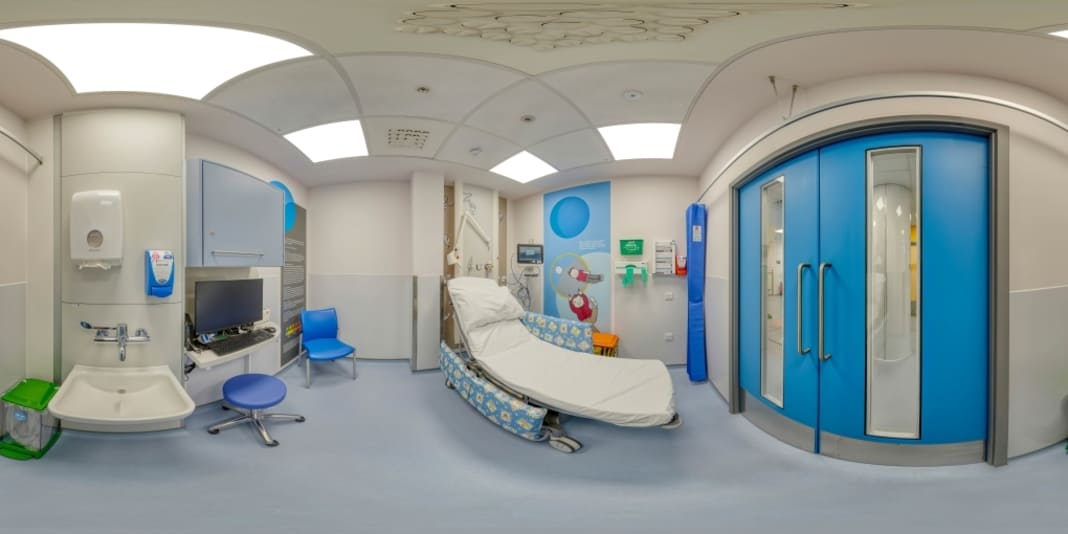
A children’s hospital appointment in London is a structured assessment
A hospital appointment does not automatically mean a procedure. In a first private consultation, the main purpose is to understand your child’s concern, examine them where needed, and decide what is appropriate.
An NHS outpatient appointment or day patient appointment means a child is seen without staying in hospital overnight. It can involve diagnosis, treatment discussion or a procedure. A private paediatric plastic surgery consultation has a narrower purpose at the start: it gives you a consultant view before any treatment decision is made.
In a private consultation with Miss Jana Torres-Grau at Evelina London Children’s Hospital, I assess your child myself. I ask about the concern, listen to what has changed, examine your child where that is needed, and explain the options in plain words.
These stages are easy to mix together, so it helps to separate them.
| Stage | What it is for | What it does not mean by itself |
|---|---|---|
| First consultation | Assessment, examination where needed, explanation and care planning | Automatic surgery |
| Pre-assessment | Checks before a procedure or operation | A decision that every child needs treatment |
| Procedure | The treatment itself, if it has been agreed | The same thing as the first discussion |
| Follow-up | Review after treatment or further planning | Starting again from the beginning |
That order matters because a useful appointment starts with evidence from the consultation, not with an assumption about treatment.
If you have questions about your child’s care, you can arrange a consultation with Miss Jana Torres-Grau. Arrange a consultation
Good preparation makes the consultation clearer
Useful preparation is mainly clinical. I need the details that help me understand what you have noticed and what has already happened.
For a child hospital consultation in London, bring the items that make the discussion more accurate:
- Appointment details, including the letter, email or text information you have been sent.
- Medicine and allergy details. A note on your phone is fine if it is accurate.
- Your questions. Parents often remember the main worry and forget the smaller ones once the appointment starts.
- Previous letters or referral information, if you have them.
- Photographs showing change over time, if the concern has altered and the photos are clear.
- A notebook, tablet or notes app, so you can record what matters.
A GP referral is helpful if you already have one because it gives background. It is not needed for a private consultation with me.
Questions are worth writing down in advance. A parent may want to know what the finding is, whether anything needs doing, what waiting would mean, or what a procedure would involve if one is discussed. Those are fair questions, and the appointment is the right place to ask them.
If you already have a referral, bring it. If you do not, it is not required for a private consultation.

A few words from Miss Jana Torres-Grau
Bring any referral letters, medicine details and clear photographs of change over time. These help the consultation stay focused on the concern from the start.
Examination is part of the first consultation where it is needed
Your child is examined at the first appointment where an examination is needed to understand the concern. The examination depends on what you have come about, such as a scar, birthmark, hand difference, ear concern, tongue-tie or reconstructive surgery question.
I start with the history. I ask what you have noticed, how long it has been there, whether anything has changed, and whether your child has had previous treatment. Where your child is old enough to explain their own symptoms or view, I include them in the conversation in a way that fits their age.
Examination comes next if it is needed. I explain what I need to look at before I examine your child. A parent or carer stays part of the discussion, and the aim is to keep the appointment clear for both you and your child.
A useful appointment is based on examination and explanation, not assumption. I am on the GMC Specialist Register for plastic surgery and hold FRCS (Plast), but the letters after a surgeon’s name matter less to you on the day than the answer you leave with. I tell you what I find, what the options are, and when surgery is not the right step.
Tests, surgery and online appointments are separate parts of the pathway
Tests, surgery and online appointments are three different things. A first consultation can lead to one of them, but none should be treated as automatic.
Some children need another department involved after the consultation. At Evelina London Children’s Hospital, a child may need to see another clinician or attend for imaging, which means hospital pictures or scans, or for a blood test. That depends on what is being assessed.
Pre-assessment means checks before a procedure or operation. If a procedure or surgery under general anaesthetic is being considered, your child may need pre-assessment. A general anaesthetic is medicine that puts a child fully asleep for a procedure.
Surgery should be discussed only where it is relevant. The first consultation is where I explain whether surgery has a role, what the alternatives are, and what would need to happen before anything is agreed.
Online appointments can be useful for families outside London, elsewhere in the UK, or overseas. A first appointment can be in person or online, and I offer consultations in English and Spanish. Some concerns still need an in-person examination before a firm treatment plan can be made.
A clear appointment tells you which stage applies to your child now.
A few words from Miss Jana Torres-Grau
Write down your questions before you arrive. Parents often remember the main worry, and the smaller points are easier to cover when they are noted in advance.
A clear appointment should leave you with a written plan
Parents can leave a hospital appointment with a label and still feel unsure. The better test is whether you understand what was found, what the options are, and what happens after the consultation.
A clinic letter is the written summary sent after the consultation. It sets out what was discussed and the next part of the plan. In my private pathway, you receive a clinic letter, and if treatment is being considered, you also receive a written quote for that treatment.
Continuity matters here. Seeing one consultant for the first assessment, treatment discussion and follow-up gives the decisions a cleaner line. The weaker approach is a rushed appointment that leaves you with separate pieces of information and no clear order. The stronger approach is a consultant-led assessment that gives you an explanation, a plan and a record you can refer back to. That second approach holds up better long-term because later decisions are built on what was actually found.
Main entrance to Evelina London Children’s Hospital.
Every child is different, so a personal assessment is the best next step. Ask a question
Questions parents ask me about children’s hospital appointments
Can I go into the appointment with my child?
Yes, parents and carers are part of the appointment. I talk to you about the concern and include your child in the conversation in a way that fits their age and level of understanding.
How long does a children’s hospital appointment take?
I do not give a fixed appointment length because it depends on the concern, the examination and what needs discussing. The appointment should cover your questions, the examination where needed, and what happens next.
Can a children’s hospital appointment be online?
Yes, a first appointment can be online for some families, including those outside London or overseas. Some concerns still need an in-person examination before a firm plan can be made.
Will surgery happen at the first consultation?
Surgery should not be assumed at the first consultation. The first appointment is for assessment, explanation and discussion of options. If surgery may help, the plan, timing and costs are set out separately.
How much is a private consultation?
A private consultation with Miss Torres-Grau is £250. If treatment is being considered after the consultation, the treatment cost is provided in writing.
This is general information, not medical advice.
