
What should parents know about polydactyly in babies?
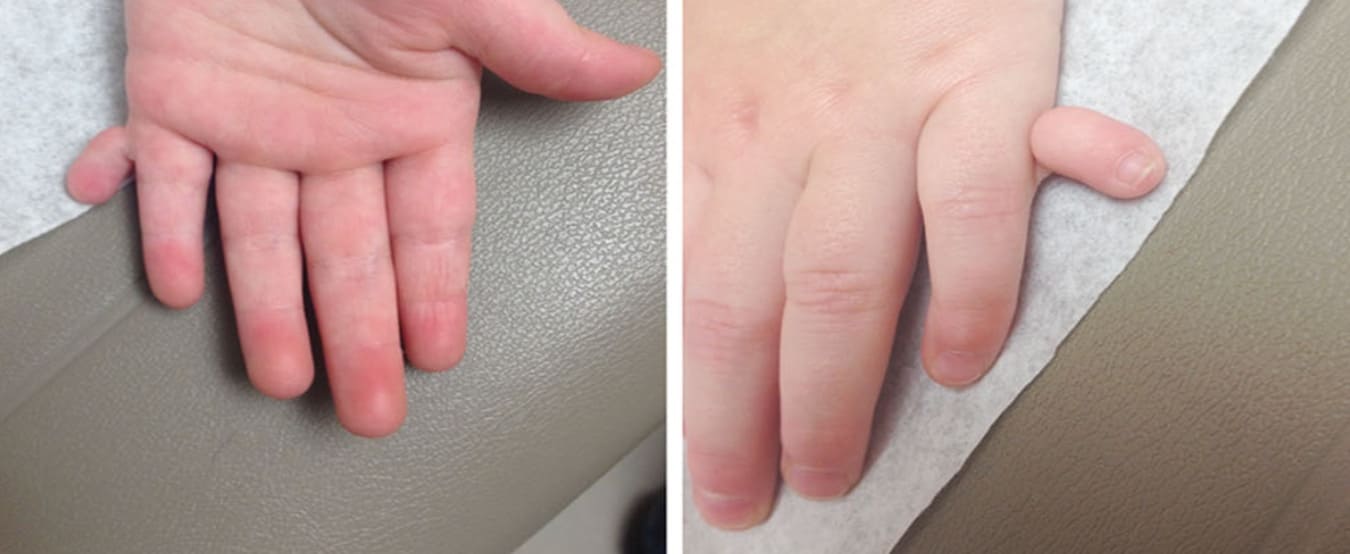
Polydactyly in babies means an extra digit, such as an extra finger, thumb, toe or small skin-like digit. The key difference is whether it is a small accessory digit or a formed digit with bone, joints, movement or thumb function. An examination identifies the type and guides safe treatment timing.
Below I explain the main types of polydactyly, what I look for during assessment, and what treatment can involve.

The type of extra digit changes the plan
Polydactyly covers several different hand differences. A small extra little finger on a narrow stalk is assessed differently from an extra thumb or a formed extra finger.
The medical term for an extra digit is a supernumerary digit. A broad 2017 review by Ahmed and colleagues estimates polydactyly at about 1 in 700 to 1 in 1,000 live births, although that is a broad literature figure and not a UK-specific rate.
Parents often hear several terms at once. The useful split is by where the extra digit sits and how much structure it contains.
| What parents may see | Medical language that may be used | Why it matters |
|---|---|---|
| Extra little finger on a narrow stalk | Accessory digit, postaxial or ulnar polydactyly | Assessment decides whether a smaller procedure is suitable |
| Extra thumb or split thumb | Thumb duplication, preaxial or radial polydactyly | Joints, tendons, pinch and reconstruction need close assessment |
| Extra digit in the middle of the hand | Central polydactyly | The hand structure needs careful examination |
An accessory digit is the parent-friendly term often used for an extra little finger or toe. Preaxial or radial polydactyly means the extra digit is on the thumb side. Postaxial or ulnar polydactyly means it is on the little-finger side.
As Miss Jana Torres-Grau, Consultant Paediatric Plastic Surgeon, I make this distinction during assessment because the label alone does not decide treatment. The attachment, movement, nail, bone and hand function matter more than the visible size of the extra digit.
If your child has a hand or finger difference, a specialist can explain the options. Arrange a consultation
A proper assessment looks past the skin
Two babies can both appear to have an “extra finger”, but the questions in the room can be very different. One baby may have a soft, narrow-stalk accessory digit with no useful movement. Another may have an extra thumb with joints and tendons that affect pinch.
I examine the whole hand, including the part that stands out. I look at where the digit attaches, whether it moves, whether it has a nail, and whether there is any sign of bone or joint involvement. Blood supply and nerves also matter, because a narrow stalk can contain structures that need proper handling.
Family history can be relevant. Accessory digits are inherited in about half of cases, according to Evelina London’s May 2024 patient leaflet, but inheritance does not give the full answer for every child. I ask about it as part of the assessment, then return to the hand itself.
An X-ray can help where bone or joint involvement is suspected. I do not treat it as automatic for every baby, because the need depends on what I find when I examine the digit. For families in London, across the UK or overseas, the aim is the same: identify the anatomy before discussing treatment.
I work at Evelina London Children’s Hospital and I assess each child myself. Where surgery is agreed, I carry it out myself, so the explanation and the treatment plan stay joined up.
A few words from Miss Jana Torres-Grau
For a narrow stalk accessory digit, ask whether the digit contains bone, joints, or a meaningful blood supply before any treatment is agreed. That detail changes the safest approach.
Small accessory digits can be a shorter procedure
When appropriate, a narrow-stalk accessory digit can be removed under local anaesthetic. Local anaesthetic means medicine is used to numb the area while the baby stays awake.
Evelina London’s May 2024 leaflet says this procedure is best done when a baby is under 6 months old because babies cope with it better. It also says that children over 12 months old usually have a general anaesthetic. A general anaesthetic is medicine that puts a child fully to sleep for a procedure.
For a suitable accessory digit, the sequence is simple to understand:
- The area is numbed with local anaesthetic.
- I remove the extra digit.
- The wound is closed with dissolvable stitches, which break down by themselves.
- A small dressing is applied.
- Aftercare focuses on protecting the wound and checking that healing is progressing as expected.
Bleeding and infection are recognised risks of accessory digit removal. Any cut also leaves a scar. I talk through those points before any procedure is agreed, because a short procedure still deserves a proper explanation.
Parents sometimes ask whether an extra finger can be tied off. A surgeon should examine the digit before any plan is made, because the stalk may contain tissue that matters and twisting can affect the blood supply. I do not want a parent leaving with the idea that tying off is a casual shortcut.
Thumb duplication is reconstructive surgery
An extra thumb in a baby is a different planning problem from a small accessory digit. Thumb duplication, also called preaxial or radial polydactyly, can involve bone, joints, tendons and the nail. The thumb is central to pinch, so treatment planning focuses on how the child will use the hand as it develops.
The aim is a useful thumb
Thumb duplication surgery is planned around thumb function. A 2016 review by Van Wyhe and colleagues describes the goals as creating a thumb of adequate size, preserving pinch function and reconstructing the necessary parts in one procedure.
In plain terms, I look at which part of the duplicated thumb has better size, stability and alignment. I also look at tendon balance, because tendons move the thumb and help it sit in a useful position. Reconstruction can mean removing one part and rebuilding another so the remaining thumb has the best possible chance of working well.
No article can tell you what is achievable for an individual baby. Thumb duplication varies from child to child, and the plan comes from the examination.
Timing follows function
Timing for thumb duplication is linked to hand development. The same 2016 review describes reconstruction as typically performed between 1 and 2 years of age in the literature, as pinch function develops and before fine motor skills become more established.
That timing is a guide from published practice, not a rule for every baby. I discuss timing in relation to the child’s anatomy, development and the safest way to plan treatment. A duplicated thumb deserves that level of care because the decision is about future hand use, as well as appearance.
A few words from Miss Jana Torres-Grau
For thumb duplication, bring any X-ray or earlier notes you already have. They help the consultation focus on function, pinch, and reconstruction planning.
The best decision starts with anatomy
The decision parents need is not a single word for polydactyly. The decision starts with knowing what the extra digit contains and how it relates to the rest of the hand.
A small accessory digit may lead to a short procedure under local anaesthetic if the anatomy is suitable. Thumb duplication may need reconstructive planning, often with a general anaesthetic. Some children need observation before any decision is made. I explain when surgery is suitable, and I also explain when I do not think surgery is the right step.
My role as Miss Torres-Grau is to separate what looks simple from what is structurally important. Once the anatomy is clear, the treatment discussion becomes calmer and more useful. The point to prioritise is the examination, because the safest plan follows the hand, not the label.

A photo of a consultation with Jana Torres-Grau – Illustrative Image
Early advice can help you plan the right care for your child. Ask a question
Common questions parents ask about polydactyly
Is an extra finger inherited?
An accessory digit is inherited in about half of cases, but that figure applies to accessory digits rather than every form of polydactyly. I ask about family history, then examine the hand to understand the anatomy.
Does an extra finger need to be removed?
An extra finger does not automatically need removal. The decision depends on the type of digit, how it is attached, whether it affects hand use, and whether removal or reconstruction would help.
Can an extra finger be tied off?
An extra finger should be assessed by a surgeon before any treatment plan is made. A narrow stalk can still contain tissue that needs proper handling, so tying off should not be treated as a home solution.
Does my baby need an X-ray for polydactyly?
An X-ray can be useful when bone or joint involvement is suspected. I decide whether it is needed after examining the hand, because some small accessory digits do not need the same imaging as a formed digit.
Will my baby need a general anaesthetic?
Some suitable accessory digits can be removed under local anaesthetic while the baby is young. Thumb duplication and more formed digits usually need a different discussion, because reconstruction may require a general anaesthetic.
This is general information, not medical advice.
