Miss Torres-Grau assesses and treats your child herself.
She sees your child, plans the treatment, and carries out any surgery personally.
Paediatric plastic surgery
A child’s scar may become less noticeable as it settles and matures over time. If it remains raised, tight or uncomfortable, an assessment can help explain how it may continue to change and which treatment options can help.
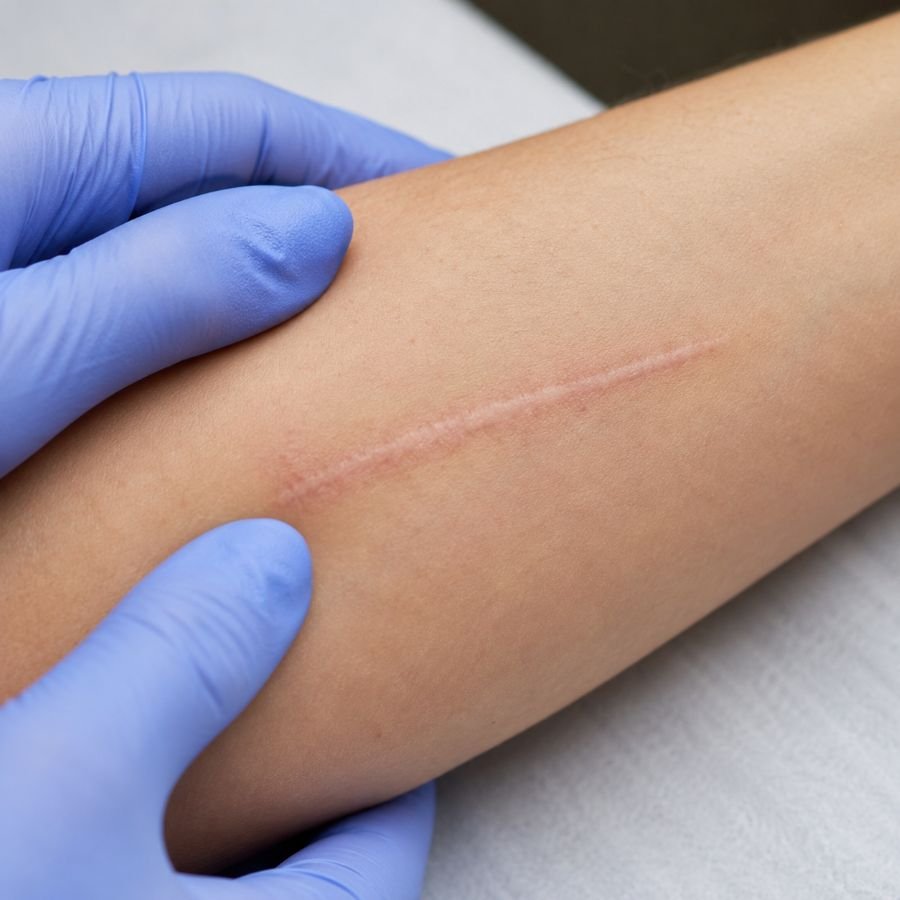
Miss Torres-Grau will look at the scar, explain the options honestly, and help you decide whether treatment is right for your child.
Request an assessment
Miss Jana Torres-Grau assesses and treats children's scars at Evelina London Children's Hospital.
Most scars can be made less obvious rather than removed, and the right treatment depends on the scar type and your child's age. A first assessment is £250.
Scar treatment can do a great deal, but it cannot make a scar vanish. What it can do is make a scar flatter, softer, paler and less tight, so it fades into the skin and bothers your child far less.
Honest expectations are the right place to begin, because a treatment that improves a scar is a success, even when a faint mark remains.
Some scars settle and fade well on their own with time and simple care, and need nothing more. Others stay raised, red or tight and do benefit from treatment.
Part of the value of an assessment is being told which of these your child has, so you treat what is worth treating and leave alone what will improve by itself. The NHS overview of scars gives the general picture, and an assessment then makes it specific to your child.
Fine-line scars often start slightly raised and red, then flatten and fade to a pale line over many months.
These are the most common type. They often need nothing more than time and good simple care. An assessment can confirm whether treatment would help or whether waiting is the right step.
Raised scars, called hypertrophic scars, are thicker and stay within the edge of the original wound. Keloid scars are thicker still and spread beyond it.
Keloid scars are more likely in some skin tones and between the ages of 10 and 30. They are approached carefully in treatment, since they can return, so any surgery is usually combined with other treatment.
Sunken scars, called atrophic scars, sit slightly below the skin. Tight scars, called contracture scars, can pull on the skin and limit movement.
Contracture scars often follow a burn. They are among the scars most likely to need treatment, both to improve appearance and to restore movement. Most of these appear after an injury, a burn, surgery, or after removing a lump, mole or cyst.
For a fresh or healing scar, silicone gel or sheets kept on over weeks reduce redness, itching and thickening, and good simple care often makes a real difference on its own.
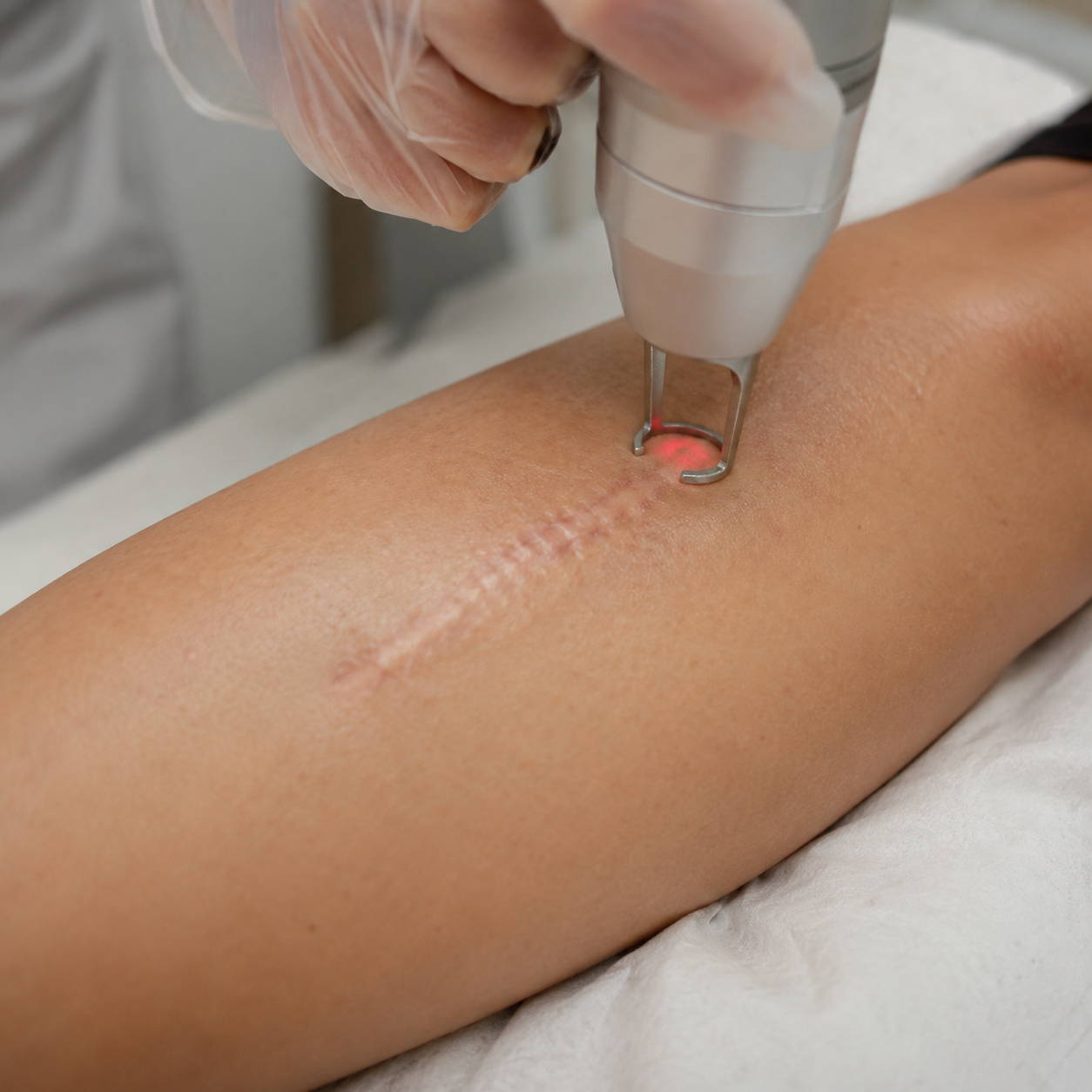
Laser is usually offered first for redness and texture, as it calms the colour and softens raised or post-surgical scars, and children are kept comfortable throughout.
Raised, thickened scars can be flattened with steroid injections or steroid creams, and tight or large scars after a burn are sometimes helped by custom-fitted compression garments.
Where a scar is too wide, too tight or poorly placed, scar revision can improve how it sits and looks. A scar is never removed entirely, only exchanged for a neater one.
Keloid scars are approached carefully, since they can return, so surgery is usually combined with other treatment to keep them settled.
The plan is always matched to the scar, your child's age and skin, and what you want to achieve, which is why it starts with an assessment. Scars after an injury are assessed in the same way, alongside the care for the original wound.
Miss Jana Torres-Grau
Consultant Paediatric Plastic Surgeon
She sees your child, plans the treatment, and carries out any surgery personally.
She will tell you whether a scar is worth treating now, whether to wait, or whether simple care at home is all it needs.
Her fellowship training in children's plastic surgery was at Great Ormond Street Hospital, and she reviews scar treatment information for the trust.
Care is at Evelina London Children's Hospital, with the dermatology and anaesthetic teams alongside. She sees children in English and Spanish, usually within the same week.
You get in touch and the team replies the same day, then arranges your first appointment, in person or online.
Miss Torres-Grau examines the scar, explains what can realistically be improved, and sets out the options honestly, including doing nothing if that is the right call.
You receive a written summary and a clear quote for any treatment, confirmed in writing before anything goes ahead.
Care is often staged over a few sessions for non-surgical options, or booked as a day case when surgery is the right choice.
Miss Torres-Grau follows up to check how the scar is settling, and any follow-up is included in the price.
A first assessment with Miss Torres-Grau is £250. At that appointment you get an honest opinion on whether treatment is worthwhile and a written quote for anything that follows, before you commit to anything.
What treatment costs depends on the scar and the plan, mainly the scar type, the option chosen, whether surgery and anaesthetic are involved, and how many sessions are needed. Simple care and a single laser session sit at the lower end, while revision surgery under anaesthetic costs more. The hospital publishes starting-from prices as a guide, and your own quote is based on your child. All care is private and self-pay, with any follow-up included.
Not sure whether your child's scar is worth treating? An assessment will give you a clear answer either way.
No obligation, and no pressure to go ahead.
Open any question to read more. At an assessment, Miss Torres-Grau will explain what is most relevant for your child.
A scar cannot be removed completely, but it can usually be made flatter, softer and less noticeable. Treatment aims to improve how a scar looks and feels, and many scars fade considerably with the right care and time.
Many scars fade well on their own and need only simple care, so an assessment tells you whether your child's scar is likely to settle by itself or would benefit from treatment. That way you have a clear picture before deciding anything.
Most children's scar treatment does not involve surgery and is designed to be comfortable, with options such as silicone gel, laser and steroid treatments. Surgery is kept for scars that truly need it, and where it is used it is done under anaesthetic so your child feels nothing during it.
Raised scars often respond to steroid treatment, silicone and laser, which flatten and soften them over time. Keloid scars need careful management because they can return, so they are treated with a combination of methods to keep them settled.
Yes, laser can reduce redness or pigmentation and improve the texture of many children's scars, and it is often a common option. It works by calming the colour, inflammation and encouraging healthier skin, and is particularly useful for raised and post-surgical scars.
A first assessment is £250, and you receive a written quote for any treatment before going ahead. The total depends mainly on the scar type, the treatment chosen, and whether surgery and anaesthetic are involved.
Fill in the form and the team will be in touch, usually the same day. There is no obligation, and I will always give you an honest view of what scar treatment is the right choice for your child.
All fields marked * are required. Your details are kept private and never shared.
Most children's scars can be improved in a meaningful way with the right plan and a bit of patience, and a fair number need little done. Simple scar management with massage and silicon is enough. A scar that looks concerning to a parent can settle well with time, and an assessment tells you clearly which applies to your child.
Miss Jana Torres-Grau · Evelina London Children's Hospital, Westminster Bridge Road, London SE1 7EH
We use cookies to improve your experience on this website. You may choose which types of cookies to allow and change your preferences at any time. Disabling cookies may impact your experience on this website. You can learn more by viewing our Cookie Policy.