
At what age can laser treatment start?
Laser treatment can start while your child is still a baby, once an individual assessment shows it suits the stain and your child.
There is no universal starting age for port wine stain laser treatment. The assessment considers the stain, the area planned for treatment and how the baby can stay comfortable and still.
A port wine stain, also called a capillary malformation, is a vascular birthmark caused by tiny blood vessels under the skin developing abnormally. It is generally present at birth as a flat pink, red or purple mark.
The stain grows as your child grows. It may become darker, thicker or raised later in life. The British Association of Dermatologists explains that early treatment may give a better response where the skin is thinner and the stain covers a smaller area. The assessment is where the right timing for your baby is decided.
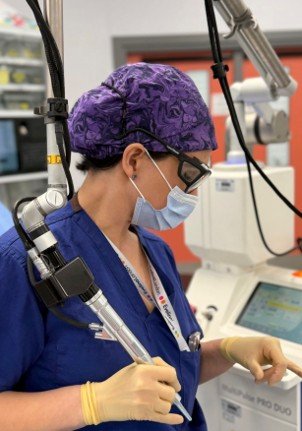
A test patch checks the skin response
A test patch uses a few laser dots to show how the birthmark and surrounding skin respond before a larger area is treated. A full session treats a planned section of the stain using many small dots.
Pulsed dye laser sends light into the skin. Red blood absorbs that light, which heats and damages the widened blood vessels beneath the surface. Each laser contact covers only a few millimetres of skin.
The test-patch process has four steps:
- The clinician examines the stain and discusses the treatment area.
- A test patch may be used. Local anaesthetic cream, which numbs the skin, may be suitable for this small area. A cold dressing can follow the treatment.
- The skin settles before the response is reviewed.
- Wider treatment is planned if the test response supports it.
A general anaesthetic is a medicine that keeps a child asleep and still during treatment. The choice depends on your child’s age and ability to stay still. It also depends on the size and location of the area being treated. Small areas may suit local anaesthetic cream. Some specialist centres limit repeated general anaesthetics in early infancy, which makes the anaesthetic plan part of deciding when treatment starts.
Comfort and stillness guide the treatment plan, because your child needs to stay still while the laser is applied. The anaesthetic choice is agreed at the assessment.
If you have questions about your child’s care, you can arrange a consultation with Miss Jana Torres-Grau. Arrange a consultation
Protect treated skin as it heals
Pulsed dye laser causes the treated area to darken or develop blue-black bruising straight after treatment. Swelling and bruising generally settle within seven to ten days after the laser session.
The skin is fragile during this recovery period. It may feel sore, similar to mild burning. Temporary crusting or blistering can occur.
Aftercare focuses on protecting the treated area:
- Protect bruised skin. Follow the treating team’s instructions for keeping the area clean and avoiding friction.
- Keep skin out of the sun. A tan increases the chance of laser side effects and may delay a planned session.
- Use high-factor sunscreen. Apply it to exposed treated skin throughout the treatment course.
Pigment change can occur after laser treatment. Scarring is rare. Blistering can occasionally lead to a scar. The treating team provides instructions that match the treatment area and your child’s skin response.
A few words from Miss Jana Torres-Grau
Take clear photographs of the birthmark in natural light before an appointment. Include one wider image showing its location and one closer image showing its colour and surface.
Realistic treatment aims focus on lightening
Pulsed dye laser makes a port wine stain paler over a course of sessions. Complete removal cannot be promised, and each stain responds differently. Treated areas can darken again later in life, which is worth discussing at the assessment.
The factors below shape the likely response and the discussion about what treatment can achieve.
| Feature | What it can mean for treatment |
|---|---|
| Where the stain sits | Facial stains generally respond better to laser than stains on the limbs or body, and the assessment sets aims to match. |
| Smaller stain treated in infancy | A smaller area and thinner infant skin may support earlier treatment planning. |
An ophthalmologist, an eye specialist, assesses your child when a port wine stain involves the area around the eye. The ophthalmologist checks for glaucoma, which means raised pressure inside the eye.
Miss Torres-Grau personally assesses your child and explains what treatment can realistically achieve. A useful plan gives you a clear view of the likely lightening, the practical treatment route and the care your child needs.

Jana at her desk – Children Surgeon Consultation
A few words from Miss Jana Torres-Grau
Ask which anaesthetic approach is planned for the test patch and any wider treatment. The size and location of the area, alongside your baby’s ability to stay still, guide this decision.
Common questions about port wine stain laser
Can a three-month-old baby have pulsed dye laser?
Yes, there is good evidence to show it is safe and effective. The appropriate timing depends on the stain, the treatment area and the anaesthetic plan for that child.
Does every baby need a general anaesthetic for laser treatment?
No. Some small treatment areas suit local anaesthetic cream. A general anaesthetic may be used where the laser would be uncomfortable or where a child needs help staying still.
How long does bruising last after port wine stain laser?
Bruising and swelling generally settle within seven to ten days after treatment. The treated skin remains fragile during this period.
Can laser remove a port wine stain completely?
Laser makes a port wine stain lighter, although complete removal cannot be promised. A course of repeated sessions is usually needed, and the amount of lightening varies between stains.
Does a port wine stain around the eye need an eye check?
Yes. A stain around the eye needs assessment by an ophthalmologist. The eye specialist checks for glaucoma, meaning raised pressure inside the eye.
This is general information, not medical advice.
Reviewed by Miss Jana Torres-Grau, Consultant Paediatric Plastic Surgeon, FRCS (Plast), General Medical Council Specialist Register.

Paediatric plastic surgery consultation for children
Every child is different, so a personal assessment is the best next step. Ask a question