When should a child’s keloid be cut out?
A child’s keloid should be cut out only as one part of a combined plan of treatment. Cutting a keloid out on its own rarely works, because the keloid is likely to grow back. A steroid injection or pressure on the scar after surgery may reduce that risk.
What a keloid looks and feels like
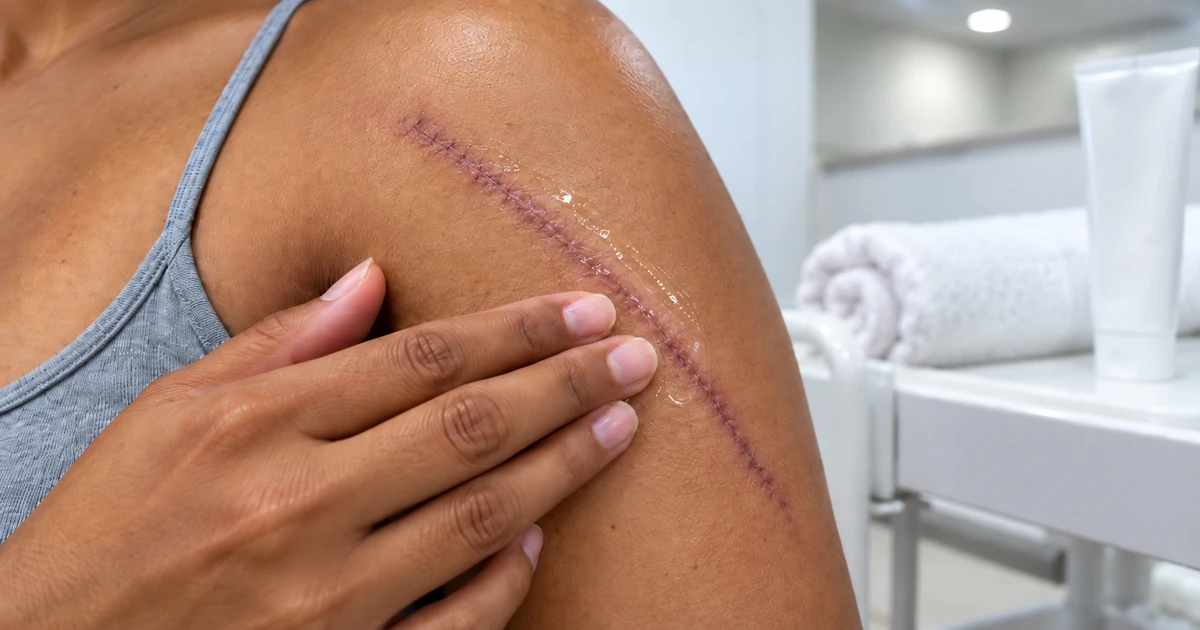
A keloid is a scar that keeps growing beyond the edges of the original wound, and it may be permanent. An ordinary raised scar (hypertrophic scar) stays within the area of the original injury. A doctor usually diagnoses a keloid by looking at it, and takes a small skin sample (biopsy) only if the diagnosis is uncertain. Keloids are firm, shiny and hairless. While a keloid is growing, it may feel itchy, prickly or sore, and the discomfort usually settles once growth stops. A keloid over a joint can limit movement.
Where keloids form and who gets them
Keloids are more common on the upper chest, breastbone, shoulders, chin, neck, lower legs and earlobes, especially after ear piercing. They often follow burns, acne, infected wounds or surgical scars. A keloid can appear within 3 to 4 weeks of a skin wound, or take a year or longer, according to the British Association of Dermatologists.
Keloids can affect anyone. They are more common in people of African, Asian or Hispanic descent, and most often appear between puberty and the age of 30.
A 2026 review in Annals of Plastic Surgery found that keloids in children become more common in the teenage years (adolescence), with the earlobe the most common site.
How often a keloid grows back after surgery
Regrowth after surgery alone happened in almost 100% of cases in a 2023 review by Bjerremand and colleagues. The 2026 review found that more than half of keloids can grow back within a year of surgery.
If you have questions about your child’s care, you can arrange a consultation with Miss Jana Torres-Grau. Arrange a consultation
Other treatments for keloids
There is no cure for keloids, and no single treatment has been shown to work better than the others, a combination approach is the most effective. This can include but is not limited to:
- Steroid injections into the keloid (intralesional steroid injections) they are usually a course every 6-8 weeks. We would suggest at least 2, if there is good response more may be recommended and if there is not then not. They are also used pre excision of the keloid with the aim to soften the skin surrounding.
- Silicone gel or dressings are safe, sold by pharmacists and used over several months.
- Pressure from bandages, clips or splints may help, particularly on the earlobe.
- Laser treatment can help, especially when combined with steroid injections.
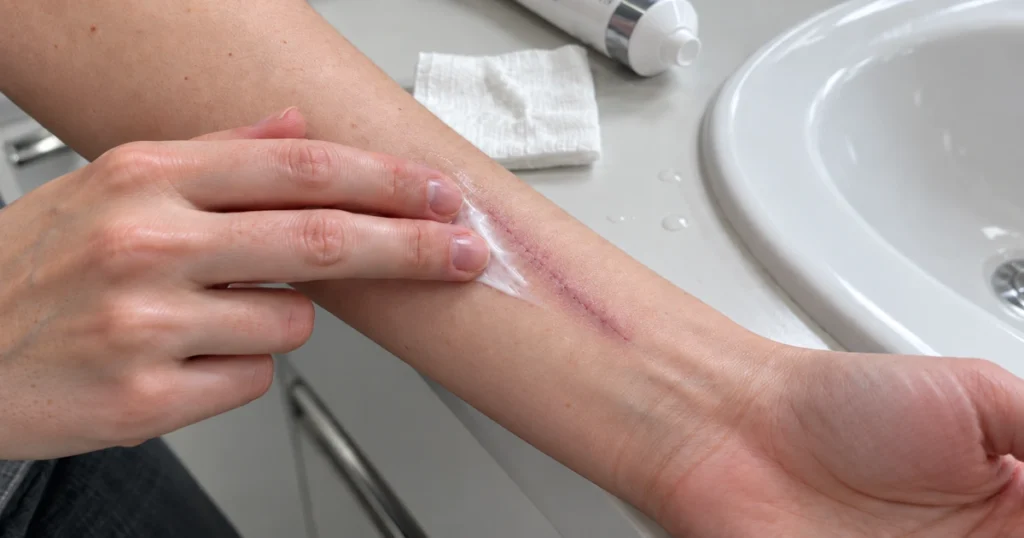 Healing Forearm Surgical Scar Care – Illustrative Image
A few words from Miss Jana Torres-Grau
You can help Miss Torres-Grau plan your child’s care by noting when the scar first appeared and what caused it, such as a burn, acne or an ear piercing. It also helps to note whether the scar still feels itchy, prickly or sore, because a growing keloid can feel this way.
When is surgery considered for a child’s keloid?
Surgery is the main treatment for keloids that are very large and even with some response to other treatments they are present causing symptoms, both physically and psychologically. Injections, pressure or silicone used on their own have a limited effect but these treatments added after surgery in a combination approach show the best results.
Miss Jana Torres-Grau assesses each child herself. A young person’s own view matters in the decision about surgery.
What keloid surgery involves for a child
Surgery aims to reduce the bulk of scar tissue and reconstruct the area to their normal anatomy, such as in earlobes. A new scar forms in its place, which should not become keloid again with further measures after.
A child sleeps through the operation under a general anaesthetic, and usually has numbing medicine (local anaesthetic) that eases pain for several hours after waking. Steroid injections may be given straight after the procedure, to lower the chance of the keloid growing back.
Serious problems are uncommon with modern anaesthetics, and most children recover quickly, according to the Royal College of Anaesthetists. Feeling sick and a sore throat are common afterwards and usually last a short time.
If the child is older and will tolerate a local anesthetic procedure then this is recommended. The child will be awake, an injection of local anaesthetic given to numb the area aand the procedure performed. This means there is no risk of general anaesthetic, your child can eat and drink and go home straight after.
Recovery after the operation unde general anaesthetic
The scar revision leaflet from Evelina London Children’s Hospital gives these usual steps:
- A child may be drowsy, restless or upset for up to an hour after waking, and can usually eat and drink as normal within 1 to 2 hours.
- Parents give regular paracetamol and ibuprofen for up to a week, then as needed.
- Dressings usually stay on for 5 to 7 days, and parents keep the wound clean and dry until a wound check or phone appointment.
- Scar massage starts only when the team says it is safe, usually about 1 month after the operation.
- Parents keep the scar out of the sun for at least 6 months, using sunscreen of SPF 50 or higher with a UVA rating of at least 4 stars.
A few words from Miss Jana Torres-Grau
If surgery is part of the plan, you can ask which treatment will follow the operation, such as a steroid injection or pressure on the scar. These treatments may lower the chance of the keloid growing back. For a keloid on the earlobe, pressure from a clip may help in particular.
Why radiotherapy is used with care in children
Radiation treatment (radiotherapy) is sometimes given after a keloid is cut out, but it is almost never used in children because it carries a small risk of cancer. For children, the 2026 review advises keeping it for carefully chosen cases at high risk, such as large or returning keloids, because of concerns about growth and cancer risk. In the small studies it pooled, about one in five keloids in children came back after surgery followed by radiotherapy. No cancers or growth problems were seen during an average follow-up of about 32 months, which is too short to establish long-term cancer safety.
Risks of keloid surgery
The usual risks of scar surgery are:
- bleeding
- infection that needs antibiotics
- a collection of fluid under the skin (seroma)
- discoloured skin
- the scar not improving as expected or, rarely, a larger scar
- numbness or pain around the scar, which usually settles within a few weeks
- The keloid coming back
When to contact the team
Parents should contact the team if the wound bleeds, looks infected or swells with fluid. Numbness or pain that does not settle is another reason to get in touch. The same applies if the scar becomes raised, itchy or sore again, because a growing keloid can feel this way.
Every child is different, so a personal assessment is the best next step. Ask a question
How recovery is planned
Where surgery is appropriate, Miss Torres-Grau performs the operation herself. Each family receives its own written plan and chooses an appointment date that suits them.
She follows up as often as the child needs, and families have an open line of communication with her.
A first appointment can be in person in London or online, and the consultation fee is £250. Parents who would like advice about a child’s keloid can request a consultation.
Questions parents often ask
Can a keloid come back after it is cut out? Yes. More than half of keloids can grow back within a year of surgery, according to a 2026 review in Annals of Plastic Surgery. A steroid injection or pressure on the scar after surgery may reduce this risk.
Is a child asleep for keloid surgery? Not always. A child sleeps through the operation under a general anaesthetic, and usually has a local anaesthetic that eases pain for several hours afterwards. Serious problems are uncommon with modern anaesthetics. If your child is older and will tolerate an injection and staying still then an awake procedure with the area numb can be performed.
Is radiotherapy used for keloids in children? Almost never. In children, radiotherapy should be kept for carefully chosen cases at high risk, such as large or returning keloids. Long-term cancer safety cannot yet be established, because follow-up in the studies so far has been short.
This article gives general information. Only an examination can tell you what is going on for an individual child.
Reviewed by Miss Jana Torres-Grau, Consultant Paediatric Plastic Surgeon, FRCS (Plast), General Medical Council Specialist Register.