Does my child need webbed toe separation surgery?
Often not. For instance, webbing between the second and third toes, where only skin and soft tissue are joined, usually has no effect on how a child walks, runs or plays, and separating it would trade something harmless for permanent scars which tend to be lumpy and more obvious. Where bones are joined, or the toes cause a practical problem, that is a different conversation and needs an individual assessment.
Joined toes are among the more common differences babies are born with, they are usually noticed in the first weeks or months, and they frequently run in families. Nothing a parent did or did not do during pregnancy causes them.
What follows sets out how toe webbing is classified, why understanding and reassurance is so often the right answer, and what surgery can actually achieve.

What is fused matters more than how it looks
Syndactyly means two or more toes joined together, either by skin alone or by skin and bone. Two toes can look similarly joined from the outside and be quite different underneath, which is why examination and or investigations comes before any discussion of treatment.
Complete or incomplete describes how far the webbing goes
Complete syndactyly runs all the way to the tips of the toes. Incomplete syndactyly stops short of them.
Simple or complicated describes what lies underneath
Simple syndactyly involves skin and soft tissue only. Complicated syndactyly involves joined or unusually formed bones, or other deeper structures.
The most common presentation, and the one most parents are asking about, is simple incomplete webbing between the second and third toes: skin and soft tissue only, stopping before the tips, with each toe having its own separate nail. That specific combination is the one where surgery is least likely to help.
If you have questions about your child’s care, you can arrange a consultation with Miss Jana Torres-Grau. Arrange a consultation
Opting for non-intervention is a valid, evidence-based clinical choice, not a delay
Current English patient guidance is clear that simple incomplete webbing between the second and third toes does not affect foot movement, walking, running or sport, and advises against operating on it. The reasoning is straightforward: there is no functional problem to solve, and surgery would leave permanent scars where there were none. These are generally more obvious and have a worse appearance that the extra joined skin.
That guidance covers one narrowly defined presentation. Other findings change the discussion, including joined bones, toes sitting in an awkward position, difficulty with shoes, or any practical effect on how the foot works.
A child’s own view belongs in the decision too, particularly where appearance is the main reason being considered, and particularly as they get older.
Miss Torres-Grau examines the toes herself and considers how the foot works, what lies beneath the skin and what the family is hoping surgery would achieve, before advising whether an operation has a clear purpose. Where it does, timing follows the anatomy and the reason rather than a standard age, because the toe-specific evidence does not support one.

Evelina Hospital in London – Waiting area
A few words from Miss Jana Torres-Grau
Before the consultation, note whether the toes affect anything practical: walking, running, sport, or getting shoes on. If you cannot think of anything, that is useful information rather than a gap in your preparation.
Surgery trades webbing for scars
Separation is done with planned zig-zag cuts and local skin flaps, using nearby skin to line the new space between the toes.
Skin is the constraint. Two joined toes have less skin between them than two separate toes need, so where the local skin will not stretch to cover both sides, a full-thickness skin graft is taken from elsewhere on the body. That means a second wound and a second scar at the donor site, and grafted skin often ends up a slightly different colour from the skin around it.
| Decision point | No intervention | Surgical separation |
|---|---|---|
| Toe appearance | The toes stay joined | A new space is formed between them |
| Foot function | Appropriate where the webbing has no effect on it | Appropriate where anatomy or function gives a clear reason |
| Scarring | The toes keep the skin they have | Permanent scars on the toes and web, sometimes dorsum of foot, plus a donor-site scar if a graft is used |
| What it asks of the child | No anaesthetic, no wound care | A general anaesthetic, dressings, healing time, scar management and follow-up for a year at least |
| Long-term result | The webbing stays as it is | Webbing can recur, and scars can tighten or become raised |
The published evidence on foot syndactyly surgery is limited, uses varied techniques and measures outcomes inconsistently. No one can promise a particular appearance or a permanent result, and any discussion that does should be treated with caution.

Main entrance to Evelina London Children’s Hospital
What the operation and the weeks after involve
Toe separation needs planning. A general anaesthetic means the child is fully asleep throughout.
A representative pathway runs:
- Assessment, consent and fasting instructions beforehand.
- Site marking, then separation using zig-zag cuts, with local flaps forming the new web space and a graft added where coverage needs it.
- Local anaesthetic given while the child is asleep, to reduce pain as they wake.
- Bulky protective dressings, then a dressing review and surgical follow-up after a week.
- Continued dressings until it heals (approx 2/3weeks).
- Scar management, silicon tape or wedge between toes for up to a year.
Swelling and bruising are part of normal healing. The recognised risks are wound problems, infection, raised or tightened scars, problems with a graft, and webbing recurring (web creep)
Aftercare advice depends on the type of separation, the dressings used and how your child heals, so it is given individually rather than as a standard timetable.
A few words from Miss Jana Torres-Grau
Ask where the scars would be and whether a graft would be needed, and ask to see what that looks like healed. A scar you have seen is much easier to weigh against webbing you already live with.
The questions that make the decision clear
The useful questions are not about whether surgery is available. They are about whether it has a purpose for this particular foot.
Ask what exactly is joined and whether any bones are involved. Ask whether the webbing affects walking, running or shoes in any way a surgeon can identify. Ask whether a graft would be needed and where the donor scar would sit. Ask what happens if nothing is done.
If the honest answer to that last question is that nothing much happens, then that is the answer, and it is a good one. The reason to operate on a child’s foot is that leaving it alone costs them something. Joined toes on their own usually do not.
Many parents worry about the future and specifically bullying. This is valid but also very multifactorial. There is always time to intervene in the future if the child understands and it is their wish.
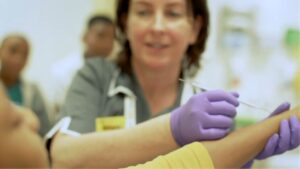
Nurse supporting young patients at Evelina London Children’s Hospital
Every child is different, so a personal assessment is the best next step. Ask a question
Common questions about webbed toe separation surgery
Does my child need surgery for webbed toes?
Usually not, if the webbing is skin only, sits between the second and third toes and does not reach the tips. That form has no functional effect, so surgery would add scars without solving anything. Joined bones or a practical problem with the foot change the answer.
Is there a best age for webbed toe separation surgery?
No standard age exists for toes. Timing depends on what is joined and why surgery is being considered, which is a different position from joined fingers, where timing matters far more. General anaesthetic risks tends to be more of a deciding factor.
Does webbed toe surgery always need a skin graft?
No. It depends on whether the local skin will cover both toes once they are separated. Some operations manage with flaps alone, others need a graft, and the surgeon can usually give you a good idea beforehand.
Can webbed toes join together again after surgery?
Yes, recurrence is a recognised risk, and scars can also tighten as they heal. Separation cannot be presented as a guaranteed permanent result, which is part of why it is not recommended where there is nothing to gain.
This is general information, not medical advice.
Reviewed by Miss Jana Torres-Grau, Consultant Paediatric Plastic Surgeon, FRCS (Plast), General Medical Council Specialist Register.
