
What happens after your child’s ear correction surgery?
Recovery happens in stages rather than all at once. Your child will probably go home the same day, once they have recovered safely from the anaesthetic. After that, the dressing, the night-time headband, going back to school and returning to sport each have their own timetable, and those timetables are set by your child’s surgical plan rather than by any general guide.
The most useful thing to understand up front is that going back to school does not mean recovery is finished. Those two things are weeks apart.
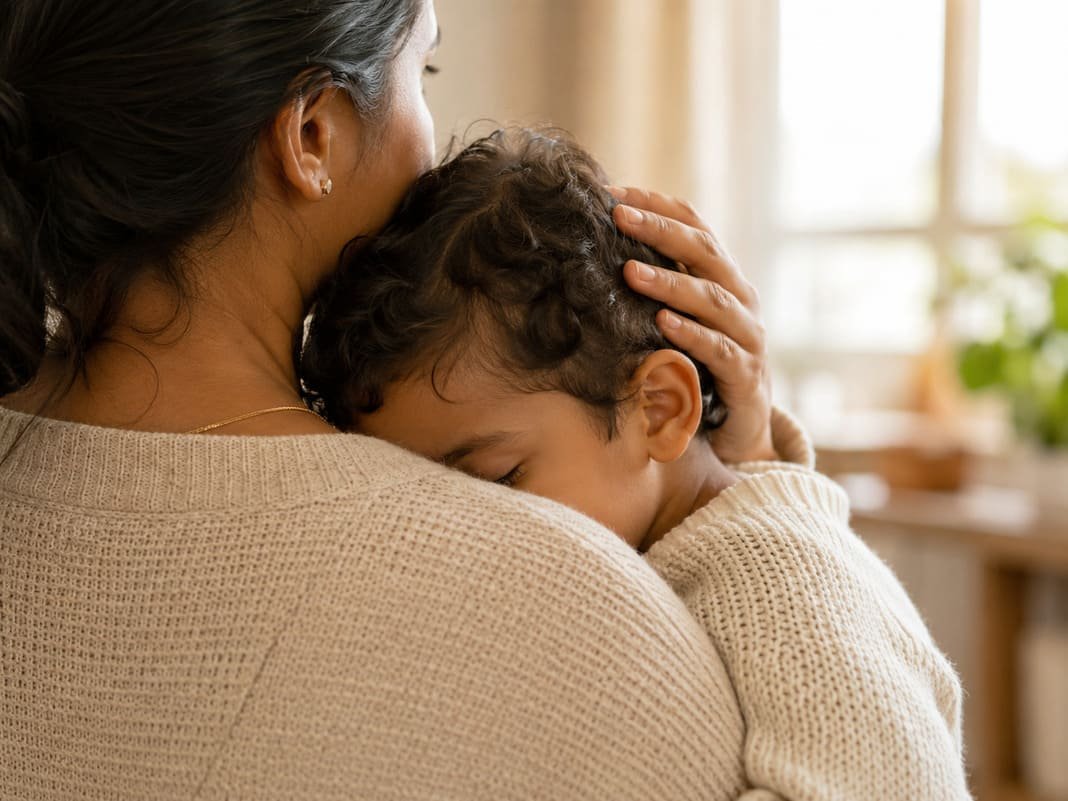
The first hours and first night are about the anaesthetic
Ear correction surgery is also called otoplasty or pinnaplasty. It reshapes or repositions the outer ear by working on cartilage, the firm flexible tissue that gives the ear its shape.
A general anaesthetic keeps your child asleep and free from pain throughout. In the Evelina London Children’s Hospital pathway, children start eating and drinking within one to two hours afterwards, and can go home the same day once they are comfortable, taking food and drink, free from significant nausea or vomiting, and behaving as they normally do.
Going home. Drowsiness afterwards is normal, and some children are restless or upset for up to an hour after waking. Neither is a sign anything has gone wrong. Keep the written discharge plan somewhere you can find it.
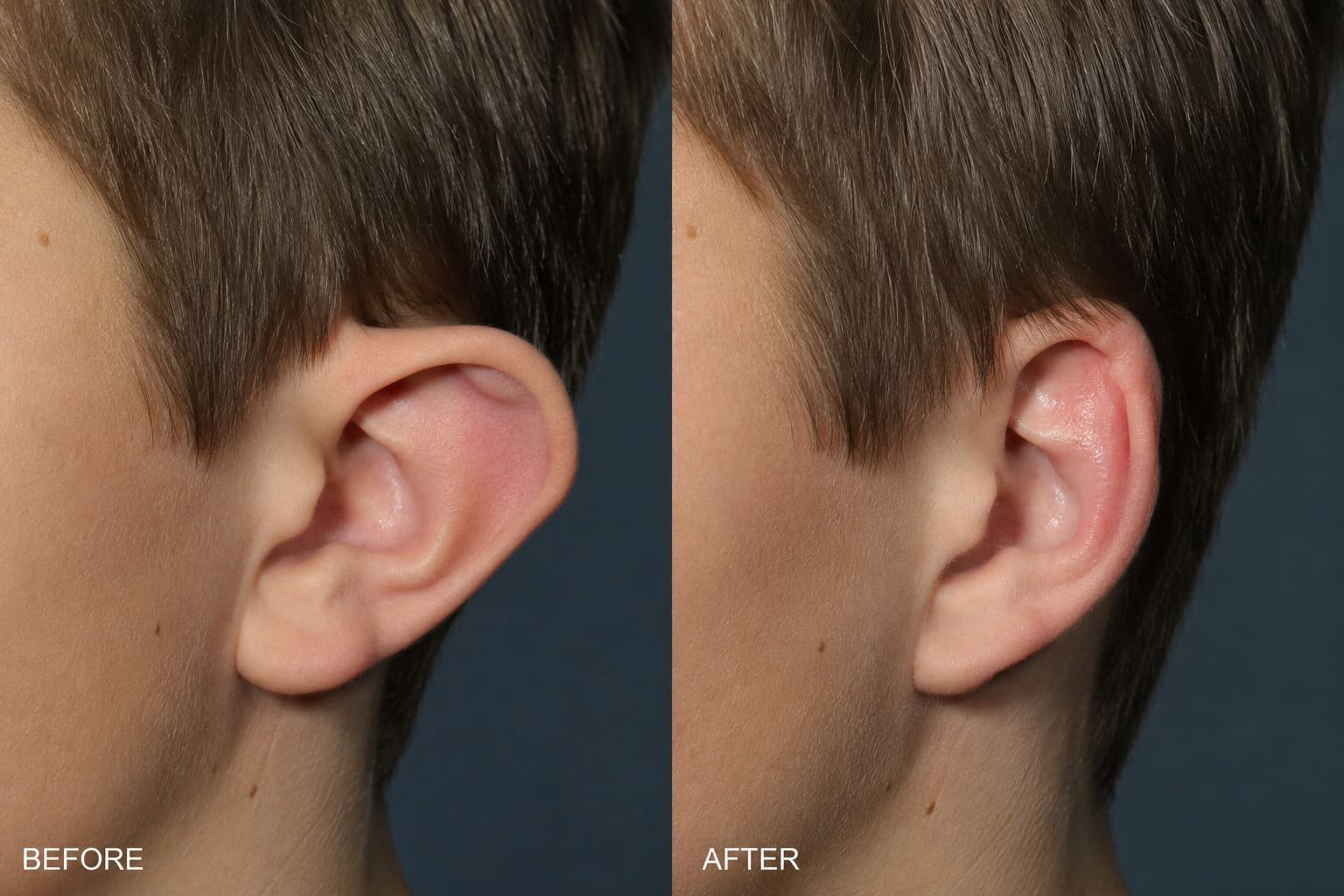
The first night. Expect sore or tender ears, some slight bruising, possibly temporary numbness or tingling, and a curved scar behind each ear. Stiffness in the ears can take several months after surgery to settle fully, which surprises people who were expecting everything to be over in a fortnight. Give pain relief only as set out in your child’s discharge plan.
The head dressing is doing a job. It protects the ears from knocks and holds them while the cartilage begins healing in its new position. Miss Torres-Grau gives families written instructions for managing all of this at home.
If you have questions about your child’s care, you can arrange a consultation with Miss Jana Torres-Grau. Arrange a consultation
The dressing and the night headband are part of the treatment
Think of the dressing as part of the operation rather than a covering over it.
- Keep it clean and dry. The Evelina pathway keeps the main bandage on for 7 to 10 days before a dressing clinic review. Children will want to scratch underneath it, and part of your job for that week is stopping them.
- Treat a wet or displaced dressing as a reason to ring. Whether it needs replacing depends on how many days have passed, how the wound looks and what your surgical team specified. Do not improvise a replacement, and do not simply leave it.
- Hair washing waits for the dressing to come off. The dressing clinic tells you when you have reached that stage and what happens next.
- Use the soft night headband exactly as directed. It stops the ears being bent or pressed on during sleep, when nobody is in a position to be careful. It should sit comfortably and must not be tight enough to press on the ears.
Protocols vary considerably between surgeons. A January 2026 otoplasty review found substantial variation in postoperative dressing and headband schedules, so where an online timetable conflicts with the instructions you were given, follow the instructions you were given.
A few words from Miss Jana Torres-Grau
Keep the written discharge plan somewhere obvious for the first fortnight. When something happens at nine in the evening, that sheet answers most questions faster than searching online, and it is specific to your child rather than to a hospital elsewhere.
Going back to school is not the end of recovery
Your child can be back in the classroom well before their ears are ready for everything else. That gap catches families out, because a child who feels completely fine still has healing cartilage that a stray football will not respect.
| Activity | Example pathway | Why protection still matters |
|---|---|---|
| School attendance | Return after the dressing clinic, 7 to 10 days after surgery | Classroom work puts no pressure on the ears, but playtime and PE are a different matter, and both need to stay restricted |
| Swimming | Avoid for 6 weeks after surgery | Water reaches a wound that is still healing, and goggles press directly on the area that was operated on |
| Contact sport and rough play | Avoid for 3 months after surgery | Knocks, pulling and collisions act on cartilage that is still settling into its new position |
Those figures come from the Evelina pathway. They are that hospital’s instructions rather than a universal timetable, and yours may differ.
Two practical things make this stage easier. Tell the school what has happened and what your child needs to avoid, because a teacher who does not know cannot enforce it. And explain it to your child in terms they will accept, since they will feel well long before the restrictions end and will not otherwise see the point.
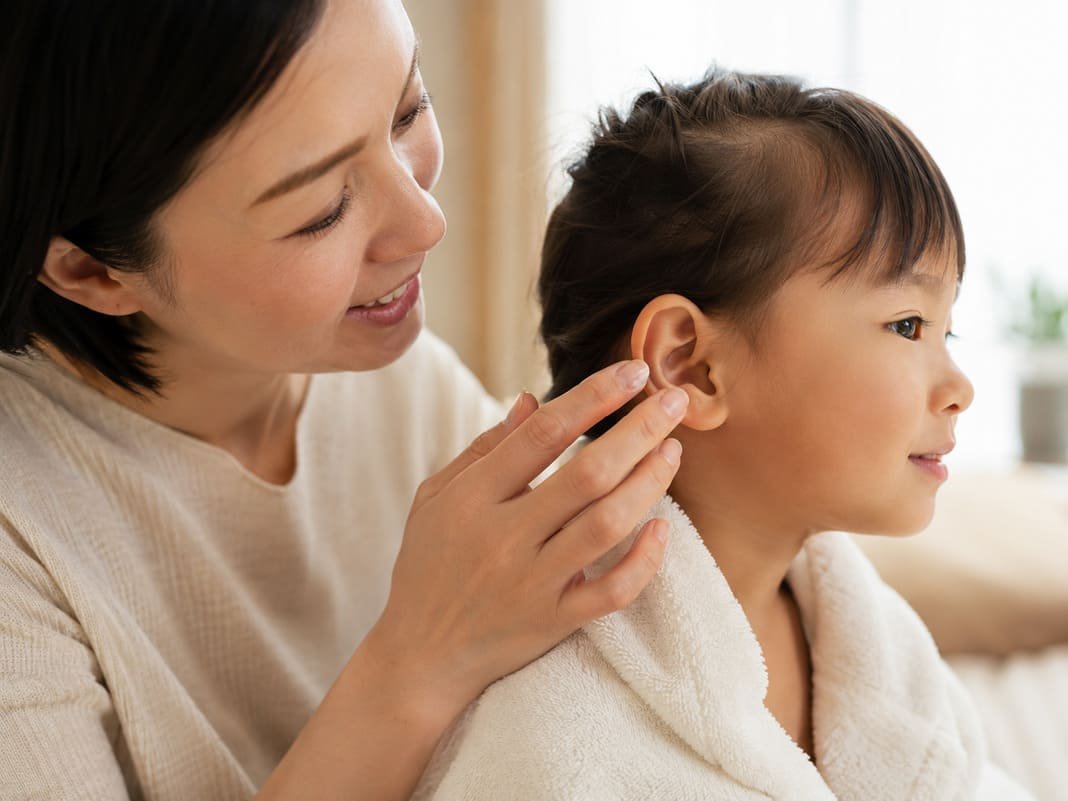
Knowing which changes need an email/phone call
Judge symptoms by their direction of travel.
Expected early effects. Tenderness, slight bruising and temporary altered sensation all belong to normal healing. They should ease gradually rather than intensify. Use pain relief as directed in the plan you were given.
Changes that need advice. Ring the team about bleeding, fever, severe swelling or spreading redness. The same goes for hard or thickened skin, a bad smell, pus, watery fluid from the wound, skin that feels hot, or your child eating and drinking poorly.
On brown or black skin, redness can look red or purple, and it can be harder to spot. Feel for heat and look for swelling as well as relying on colour.
Concerns like wound infection, a haematoma meaning a collection of blood under the skin, or a buried stitch working its way out are assessed by the surgical team rather than managed at home.
If symptoms are getting worse, or you simply are not sure, contact them. Out of hours go to A&E
A few words from Miss Jana Torres-Grau
Tell the school before your child goes back, and be specific about playtime and PE rather than saying they have had an operation. Staff who know exactly what to prevent are far more use than staff who know only to be careful.
Follow-up plan
The early review checks the dressing and the wound and confirms what happens next. Because surgical techniques differ, families need their own schedule for dressing removal, hair washing, night-time protection and returning to activity, rather than a generic one.
Miss Torres-Grau assesses each child herself, performs the surgery herself, and sets the follow-up around the operation actually carried out and how the child is healing at review.
The pattern worth holding onto is simple. Your child will be back at school while the ears still need protecting, and the protection continues well after they have stopped thinking about it.

Every child is different, so a personal assessment is the best next step. Ask a question
Common questions about ear correction recovery
How long does ear correction recovery take?
There is no single answer, because the milestones are separate. School return, night-time headband use, swimming and contact sport all have different timetables, and your child’s surgical plan sets them.
What should parents do if the head bandage falls off?
Ring the surgical team. Whether it needs replacing depends on the timing and how the wound looks, and in the Evelina pathway a bandage that comes off within the first five days after surgery normally needs replacing.
Why does a child need a headband at night after pinnaplasty?
Because nobody controls how they move in their sleep. The headband stops the ears being bent or pressed against a pillow while the cartilage is still settling. It should be comfortable and should never press on the ears.
When can my child wash their hair after ear correction surgery?
After the main dressing comes off, not before. The dressing clinic confirms when that stage has been reached and gives you the next set of instructions.
This article gives general information. Only an examination and an individual surgical plan can show what is right for a particular child.
This is general information, not medical advice.
Reviewed by Miss Jana Torres-Grau, Consultant Paediatric Plastic Surgeon, FRCS (Plast), General Medical Council Specialist Register.