How noticeable will a child’s scar be after surgery?
A child’s scar is most noticeable soon after surgery, while it is red and slightly raised. As it matures, it usually flattens and fades. Every operation leaves a permanent scar. Several things affect how noticeable it stays: where it sits, how tightly the skin is stretched, how quickly the wound heals, skin tone and family history of raised scars.
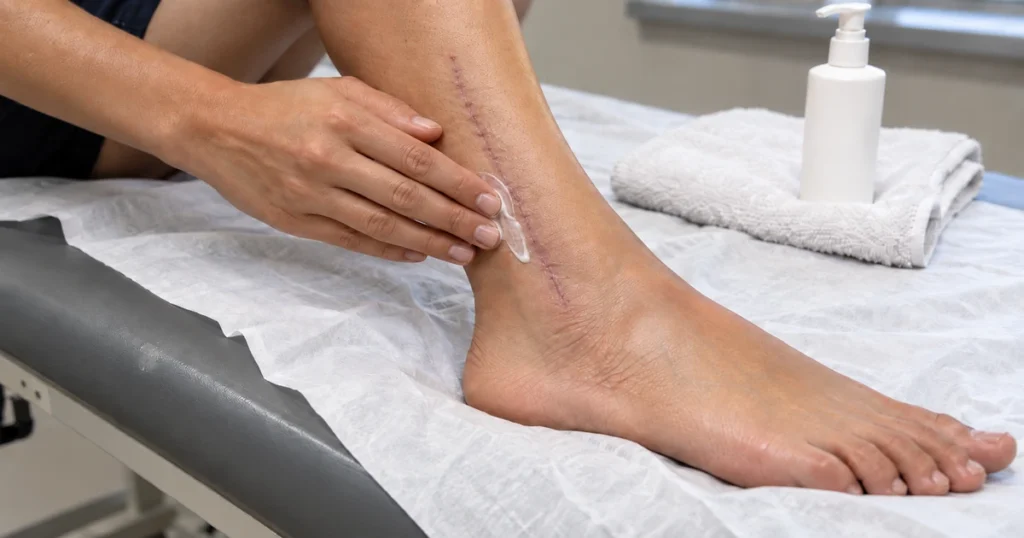 Healing Ankle Surgical Scar Care – Illustrative Image
How a scar changes over time
The surgeon closes the wound with stitches, skin glue or both, and covers it with a dressing.
A new scar keeps getting stronger for several months after the operation, and its redness can take many months to settle. Until then it is an immature scar, which can look red or thickened.
What affects how noticeable a scar is
Where the scar sits
When the skin pulls on a closed wound (tension), the scar can stretch or become thick and raised (hypertrophic scar). Where possible, surgeons place the cut along the natural lines of the skin (relaxed skin tension lines) to lower the tension. On the scalp, the cut can be angled so that hair grows through it and hides the scar.
Wounds on the shoulders, the front of the chest and over joints are under more tension, so they are more likely to form raised scars.
How quickly the wound heals
A wound that is slow to heal over (epithelialisation) has a higher risk of forming a raised scar, particularly in children.
Skin tone and family history
A scar can form on any skin tone, and it can end up lighter or darker than the skin around it. Darker skin makes more of the pigment that gives skin its colour (melanin). It is more likely to darken after the skin has been inflamed (post-inflammatory hyperpigmentation).
A child with a personal or family history of raised scars has a higher risk of forming one.
Growth
A scar on a child grows in proportion as the child grows. It can become more noticeable with age.
If you would like to discuss scar treatment for your child, a consultation is the place to start. Arrange a consultation
Raised scars: hypertrophic and keloid scars
Some scars stay thick and raised. The two main types both form when the body makes too much of a protein called collagen at the wound. The edge of the scar is the main way to tell them apart.
- A hypertrophic scar stays within the area of the original wound. It tends to settle over time and may become less noticeable.
- A keloid scar keeps growing after the wound has healed and spreads beyond it. Without treatment, it usually stays raised, and it comes back after treatment more often than a hypertrophic scar.
Keloids most often appear from the later childhood years into early adulthood, and are most common around puberty. They are markedly more common in people with darker skin, especially those of African, Asian and Hispanic descent.
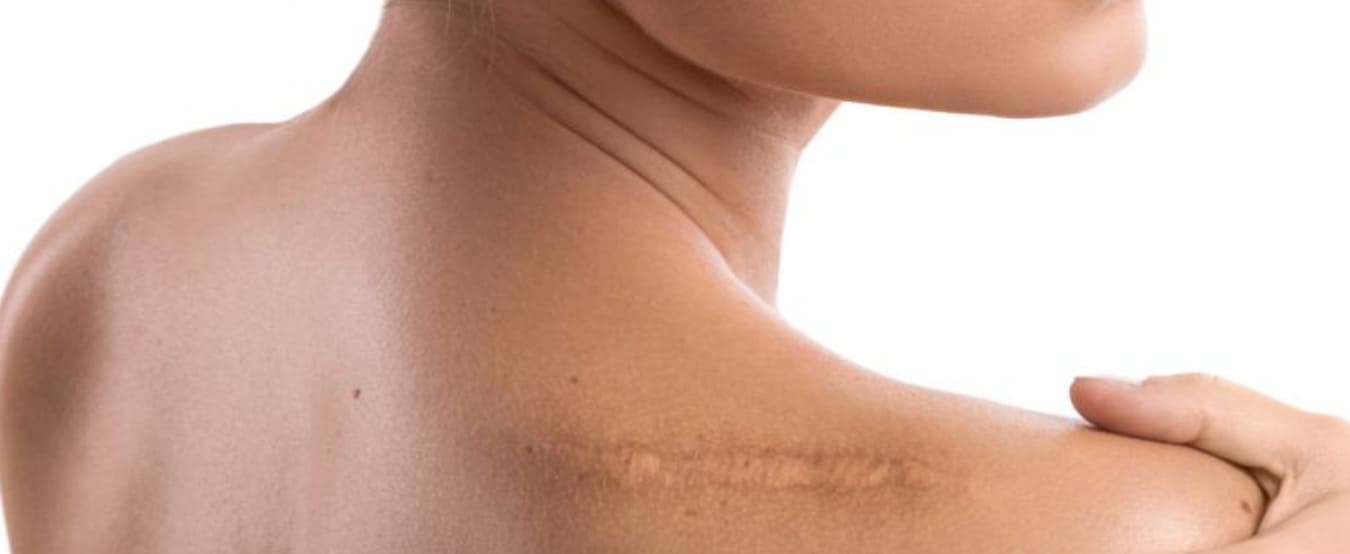
Caring for the wound and massaging the scar
Moisturising cream is used regularly while the wound heals. Scar massage starts only when the team says it is safe, once the wound has fully healed and any stitches are out. In the Evelina London scar revision leaflet, massage usually starts about one month after the procedure. Parents massage the scar with a fragrance-free, water-based cream, pressing firmly enough to make it turn pale.
A few words from Miss Jana Torres-Grau
If anyone in your family has had a raised or keloid scar, mention it to Miss Torres-Grau at the consultation. A personal or family history of raised scars increases the chance of forming one, so it is useful information for planning your child’s scar care.
Silicone gel and sheets
Silicone gel, tape or sheets can help soften and flatten a scar and ease itching. They are used only on skin that has fully healed, and they work best while the scar is still red or pink.
Of all the scar treatments put on the skin, silicone has the strongest evidence. It works best when it is worn for many hours each day, once the wound has fully healed.
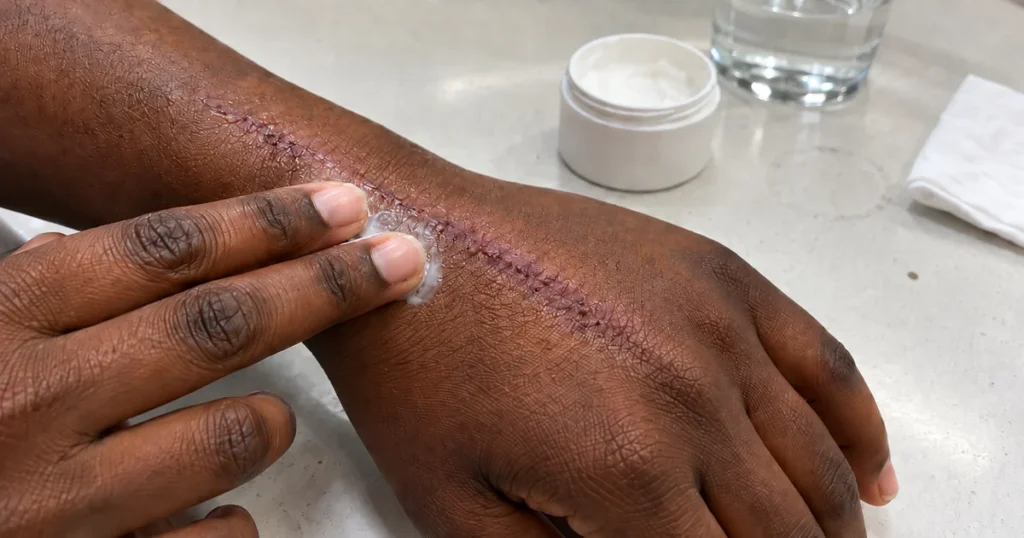 Healing Wrist Surgical Scar Care – Illustrative Image
Sun protection for a new scar
New scars burn easily in the sun, even in children whose skin rarely burns. Sun protection also helps reduce the skin darkening that can follow healing, which affects darker skin more.
In the Evelina London leaflet on skin lump surgery, sun protection for a new scar includes:
- keeping it out of the sun for at least six months after the procedure
- using sunscreen outdoors with a sun protection factor (SPF) of 50 or more and at least four stars for UVA protection
A few words from Miss Jana Torres-Grau
Keep a new scar out of the sun, and use a sunscreen with a sun protection factor of 50 or more and at least four stars for UVA protection whenever your child is outdoors. New scars burn easily, even on skin that seldom burns, and sun protection also helps reduce the darkening that can follow healing.
Risks and warning signs
Surgery to remove a skin growth or lump, such as a mole or cyst, carries some risks. These include:
- bleeding
- infection that needs antibiotics
- poor wound healing
- a raised scar, including a keloid
- changes in skin colour
- changes in skin feeling, if a nerve is affected
The wound may also be sore, swollen or bruised for a while. Parents can talk through each of these risks with Miss Jana Torres-Grau at the consultation. Families also have an open line of communication with her throughout the child’s care.
Parents should contact the team if the wound shows signs of infection:
- it looks red or purple, which can be harder to see on brown or black skin
- it feels warm or hot to the touch
- it smells bad
- yellow-green fluid (pus) comes from it
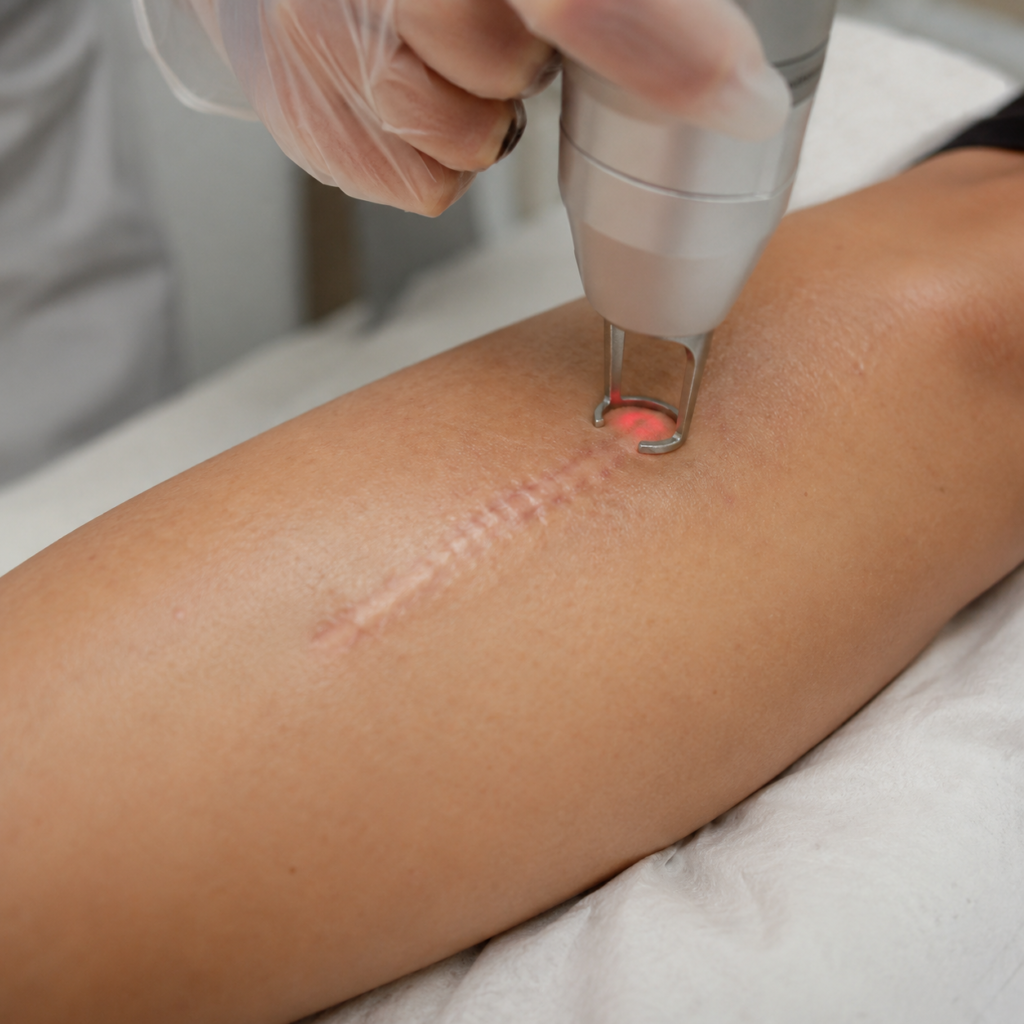 Scar removal treatment – Illustrative Image
What can be done if a scar is still noticeable later?
Options for a scar that stays raised or noticeable include silicone, pressure garments, steroid injections, laser treatment and surgical revision.
Surgeons consider scar revision once a scar has matured and is still raised or causing problems despite treatment without surgery. The operation aims to help the scar blend in with the skin around it, and a new scar forms in its place. A young person’s own view of the scar matters in deciding whether to go ahead.
The risks of scar revision include bleeding, infection that needs antibiotics and a build-up of fluid under the skin (seroma). Other risks include changes in skin colour and a scar that improves less than expected. Rarely, the scar becomes larger.
Scars behave differently in children, so a personal assessment is helpful. Ask about an appointment
How recovery is planned
Miss Torres-Grau assesses each child herself and, where surgery is appropriate, performs the operation herself. Each family receives its own written plan, and families choose an appointment date that suits them. She gives specific aftercare advice and timings at the right point in each child’s care, and she follows up as often as the child needs. Families see her from the first consultation to the final follow-up.
Parents in London, across the UK and overseas can request a consultation, and the first appointment can be in person or online.
Questions parents often ask
Will a child’s scar fade after surgery? Yes. Scars fade with time, and the redness can take many months to settle. Every operation leaves a permanent scar, so a mark remains once it has faded.
Do scars grow as a child grows? Yes. As a child grows, the scar grows with the skin around it, so a scar made when a child is young can become more noticeable over the years.
Is a keloid scar more likely on darker skin? Yes. Keloids are markedly more common in people with darker skin. A personal or family history of raised scars also increases the risk.
Can a scar be made less noticeable later? Sometimes. Options include silicone, pressure garments, steroid injections, laser treatment and, once the scar has matured, scar revision surgery. Surgeons consider revision when a scar is still raised or causing problems despite other treatment.
This article gives general information. Only an examination can tell you what is going on for an individual child.
Reviewed by Miss Jana Torres-Grau, Consultant Paediatric Plastic Surgeon, FRCS (Plast), General Medical Council Specialist Register.